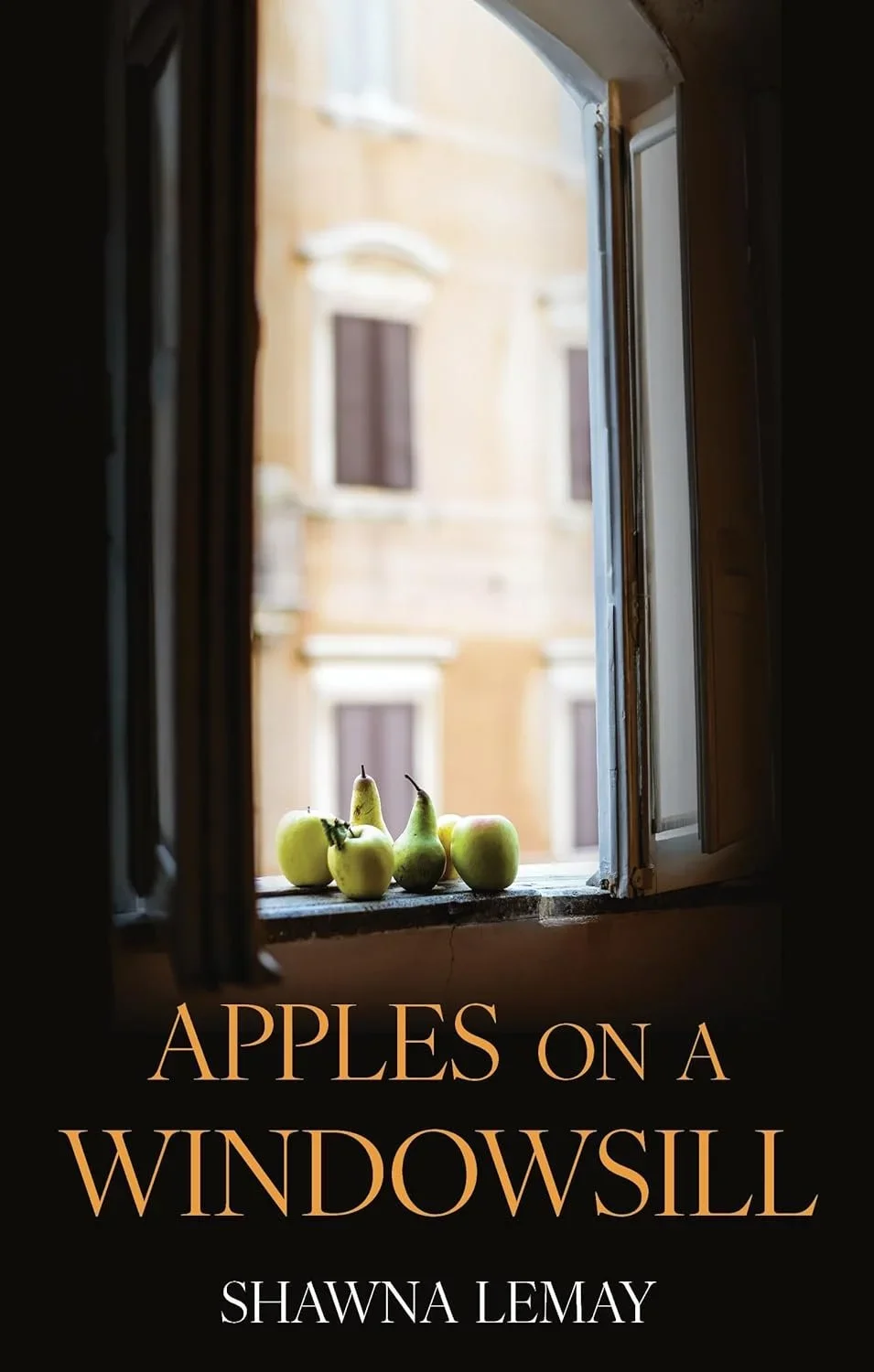
Apples on a Windowsill
A series of meditations on still life, photography, beauty, and marriage. Full of personal reflections, charming anecdotes, and the history behind the art of still lifes, this lyrical memoir takes us from Edmonton to Rome to museums all over North America as Lemay discusses the craft of writing, the ups and downs of being married to a painter, and her focus on living a life in art and in beauty. A must read for fans of The Flower Can Always Be Changing, Everything Affects Everyone, and Rumi and the Red Handbag.
Available to order through the publisher, Palimpsest Press, your local indie bookstore, and the following:
Audreys Books — Edmonton
Porch Light Books — Edmonton
Indigo — online
McNally Robinson — Saskatoon and Winnipeg
Another Story Bookshop – Toronto
Munro’s Books — Victoria
Upstart and Crow — Vancouver
Barnes & Noble
Amazon.ca
Amazon.com
Amazon UK
EXCERPTS FROM REVIEWS
“Apples on a Windowsill is a meditation on being human, and on staying human (soft and porous) in a world that makes this difficult. These are essays about marriage, and being an artist, and being the wife of an artist, working at a library, and about finding inspiration in the ordinary. As I begin a new year, I also find these essays are a helpful guide for how to be, and how to see, and I underlined all kinds of passages: “The magic trick of art, and perhaps particularly still life, is to remind us above all that there is beauty at the same time as evil. Evil is a given, but beauty persists. The magic trick of still life is that it reminds us that we’re not alone. The magic trick of still life is that it’s really not a trick at all.”
“There’s a kind of magic in this wondering, this sending of good wishes to other poets and writers and artists at work in other rooms, other spaces. This connection with others who are drawn to create. This curiosity about what they, and we, will create next. This belief in possibility, and in the value of dreaming “new possibilities,” even though we have “no idea if the ending is a happy one.”
“Shawna Lemay’s engrossing collection of essays, Apples on a Windowsill, should be required reading for anyone with an interest in creating art and being human in challenging times.”
“From the first page, Shawna Lemay’s voice is candid and thoughtful, charmingly self-deprecating and alive with wonder at the splendour to be found right before our eyes, even in the most unpromising circumstances. The book entertains and informs, but most of all it inspires. Apples on a Windowsill is an intimate act of sharing for which we can and should be grateful.”
— Ian Colford, Miramichi Reader
“A book from 2024 that I know will stay with me is Shawna Lemay’s Apples on a Windowsill. Meditative without being precious, reflective and yet still occasionally, refreshingly, acerbic, Lemay’s essays invite us to recognize the beauty in the everyday, to find everything – not just flowers or vistas but even our own “wrinkled selves” – worth looking at. As she says, “we exist right now at this exact moment and one day we won’t.” Surely we should make as much of that moment as we can.”
— Rohan Maitzen, Quill & Quire
“Liking Springsteen is easy — his songs are simultaneously accessibly generic and wholly intimate. As Shawna Lemay muses, this makes us feel like we know him almost fully, but not quite. Borrowing some of writer Siri Hustvedt’s ideas on the concept of still life to meditate on her life’s “bits and pieces,” Lemay’s essay are anything but still. From Cohen to Cezanne, Rumi to Rilke, Woolf to Chardin, she invokes greats and nuanced thought alongside the pleasures of the most mundane parts of living — eating a Big Mac, buying flowers, listening to “Born to Run.” Apples on a Windowsill shines in Lemay’s carefully constructed vignettes, offering warm camradery to her readers.”
— Kashi Seal, This Magazine
“In the face of uncertainty, photographing still-lifes became her refuge and a revelation—a way to unearth the hidden splendour of daily life amidst disaster.”
“She has convinced me that the poetry of everyday objects — a steaming mug of tea backlit by the morning sun or the gleam of dirty dishes on a kitchen table — may be the very salve many of us seek.”
“Gazing at Lemay’s untitled series of photographs and reading this book feels almost prophetic. Things haven’t changed; in fact, the world seems even scarier and more fragile. But, as Lemay points out, amidst the chaos, there is an oasis of calm: a beam of light shining through the curtains, the texture of bread on an old cutting board, or the scent of muddy soil in the spring air. Poetry is always there for us.”
— Agnieszka Matejko, Galleries West
“Lemay suggests that the still life is “the genre of loneliness and quiet” and goes on to say that we all experience still lifes. She worries that it is dangerous to be on the side of beauty as the world ends, but when she writes about the still life, she also discusses the connection between its details and trauma, and notes that loss is experienced through detail, which seems particularly wise to me and familiar, based on my own experience with grief.”
“But our relationship to beauty is complicated. Are we even allowed to care about beauty amidst all the tragedy and ugliness of the world?
Lemay’s interaction with art, whether it is a painting or a book or a song, is personal. She puts the things she loves “magically in conversation with each other,” which makes this reader love them too.”
“She talks about not being well known in Canadian Literature and not minding that, just wanting to do her work. She sees herself as ordinary but also extolls the beauty of the ordinary. To me, she is a rock star.”
— Amanda Earl, The Temz Review
INTERVIEWS & ARTICLES
– Conversation with Grant Stovel on CKUA Radio’s Alberta Morning
– Bookspo Episode Three with Kerry Clare
“Shawna Lemay Uses the Still Life Form to Explore Marriage, Beauty, and Time in Her New Essays”
“Shawna Lemay Reflects on Still Life, Marriage and Death”
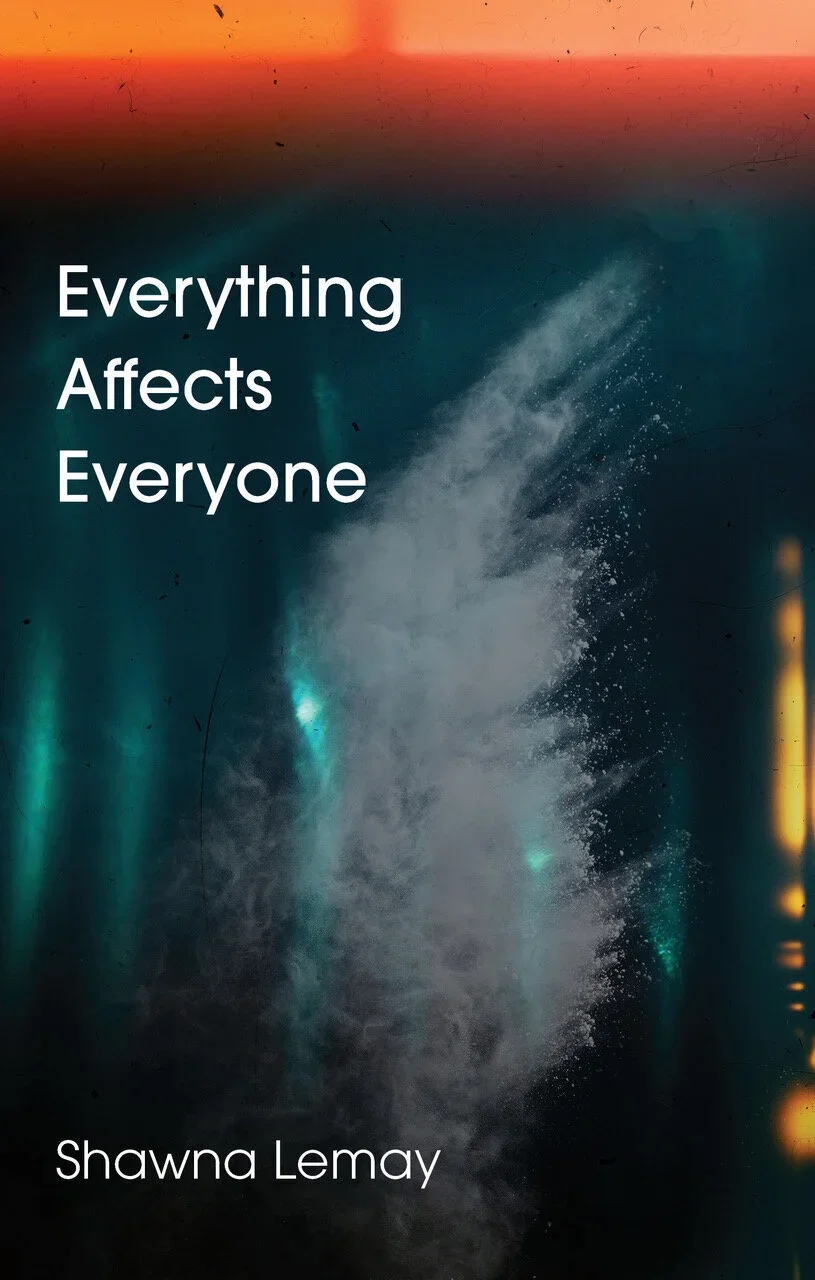
Everything Affects Everyone
When Xaviere is tasked with transcribing taped interviews her deceased friend Daphne left to her in her will, she begins to piece together the story of the photographer Irene Guernsey, a moderately well known but elusive photographer Daphne was interviewing. Irene’s mysterious images captivate Xaviere as they had Daphne. Irene had never given interviews or talked about her work publicly, but near the end of her life, she reveals the magic hidden in plain sight in her mysterious and ethereal photographs and her attempt to capture angel wings on film. And once the angels appear, the reader is taken on a journey that spans decades and changes the lives of multiple women along the way.
Everything Affects Everyone, is a novel about listening, about how women speak to one another, and about the power of the question.
“Shawna Lemay’s writing makes the miraculous accessible and the mundane seem magical. I now know that angels walk among us. Some of them write among us too.
”
– available to order via Palimpsest Press as well as through your local Indie bookstore
Audreys
Glass Bookshop
McNally Robinson
Chapters Indigo
Barnes & Noble
Amazon.com
Amazon in the UK
Amazon in Australia
– Listen to my chat with CBC’s Mark Connolly
– Edmonton Journal Review by Justin Bell
“…spellbinding…”
“Everything Affects Everyone is an unexpected delight, a novel that defies many of the conventions of narrative fiction and leaves the brain humming with ideas about the nature of art, the mystery of creativity, the role of the artist in society and the need to stretch boundaries and continually challenge the status quo. Everything Affects Everyone inspires as well, by reminding us that, for many of us, art and life are intimately intertwined.”
— Ian Colford, Miramichi Reader
“Everything Affects Everyone is wonderful and strange, rich and engaging, provocative and comforting, and filled with mystery and beauty. And what impressed me most about this book is how Lemay’s entire oeuvre is an essential context for appreciating this book properly, the way it fits into and extends her ideas and philosophy, which is utterly original, and inviting, which you can’t say about most things one might term a “philosophy.”
“Everything Affects Everyone plays out like a series short stories, each vignette threaded together with a different perspective, one person’s story connected to the next. An interview influences the life of the woman transcribing it; a stolen piece of art leaves an impact on those who witness its absence, recorded and transcribed five years later in conversations with those who saw the exhibit.”
— Justin Bell, Edmonton Journal
“Everything Affects Everyone is a taut, thoughtful novel about listening and being seen, about how women share and protect secrets, and about the nature of belief in all forms. It's a spectacular addition to Lemay's prestigious writing career, which includes the beloved Rumi and the Red Handbag, The Flower Can Always Be Changing, and Calm Things.”
The Flower Can Always Be Changing
"A lamp and a flower pot in the center. The flower can always be changing." –Virginia Woolf. From the bestselling author of Rumi and the Red Handbag comes a new collection of brief essays about the intersection of poetry, painting, photography and beauty. Inspired by the words of Virginia Woolf, Lemay welcomes you into her home, her art and her life as a poet and photographer of the every day. Lemay shares visits to the museum with her daughter, the beauty in an average workday at the library, and encourages writers and readers to make an appointment with flowers, with life.
Shortlisted: Wilfred Eggleston Award For Nonfiction, 2019
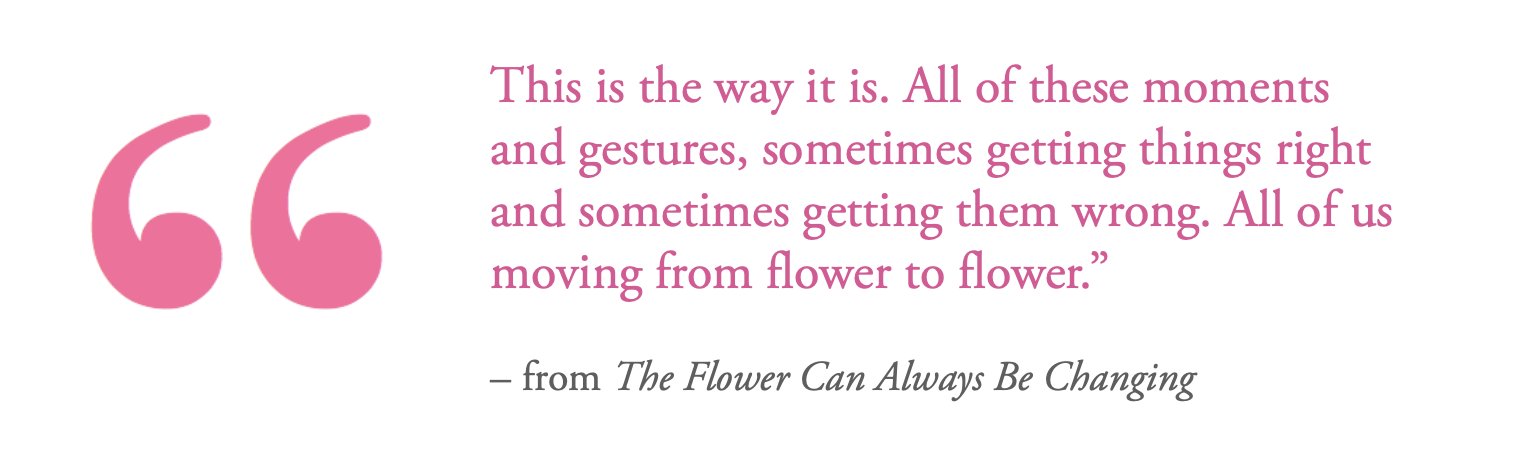
“The flower can always be changing is both a thoughtful exploration of one writer’s creative process and an invitation to us all to seek out the space of mind required to do our own best work.”
– Jody Baltessen, Prairie Fire
“I’ve been wanting to write about this book, because it’s strange and beautiful, and I’ve carried it with me all these months, since the flowers started blooming. But it’s been hard to do so, because as the book is slow and thoughtful, so has been my engagement with it. Even now that I’ve finished reading it a second time, I’m not about to put it up on my shelf, to put it away yet. I’m going to keep it by my bedside instead, for dipping in and out, because every time I open it, I seem to find something perfect and new.”
– Kerry Clare, Pickle Me This
“The Flower Can Always Be Changing (Palimpsest Press, 2018) is a collection of essays about writing, about the process of reading and writing, about day jobs, dreams, jealousies, satisfactions, that although it adds up to something greater than the sum of the parts manages to do so without losing that sense of part-ness. Life is a series of good intentions and daily tasks and internet rabbit holes, dog walks and fantasies of winning the lottery. Lemay embraces the flaws and disappointments while conveying a lot of confidence in her own practice, as a poet, blogger, and photographer. She goes to the art gallery and also to Costco.
It is important, I think, if you have aspirations of writing or making art or whatever to be careful the people you choose as your models for how the work gets done. I can be impressed by someone like Ottessa Moshfegh, whose profile in The New Yorker last year painted a picture (however accurate) of a steely, isolated writing machine. I like her writing and on a day when I’m feeling disenchanted with how I’ve constructed my life I might be tempted to take pointers from her. But I’m probably better served by someone who shares my love of the internet and the little interruptions and even thinks they have a place. The Lemay model, of perseverance while getting the other business of life done, is more to my taste, is what I’m saying. And actually she is one of my little interruptions. I like her photos on Instagram and she likes mine. When she posts something new on her (excellent) blog, Transactions With Beauty, I nearly always click along and read.

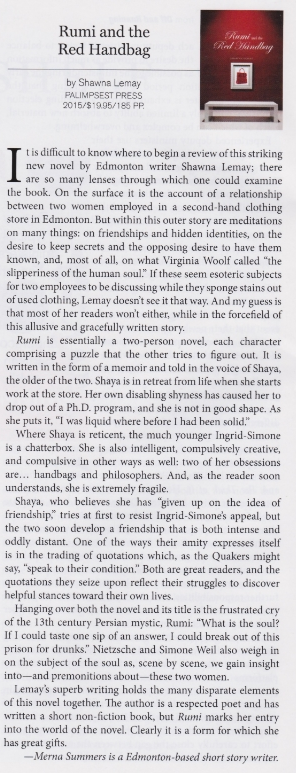
Rumi and the Red Handbag
“What is the soul?” asks Rumi, the poet. “If I could taste one sip of an answer, I could break out of this prison for drunks.”
Rumi and the Red Handbag follows the lives of Shaya and Ingrid-Simone, working together one winter at a second-hand clothing shop. Theodora’s Fine Consignment Clothing shop becomes a small world where Shaya, an academic who abandoned studying the secrets of women writers, finds in Ingrid-Simone a reason to begin writing again, on scraps of paper and post-its. Fresh, unique and intelligent, Rumi and The Red Handbag is a journey to the Museum of Bags and Purses in Amsterdam, a journey to find Rumi, the soul, and the secret hidden in a red handbag.
Finalist, 2016 Alberta Readers' Choice Award
"Edmonton author dives deep into purses and philosophy,"by Brent Wittmeier, Edmonton Journal, Friday January 9, 2016
Rumi and the Red Handbag, reviewed by Merna Summers, Alberta Views, January/February 2016 (print edition)
- Edmonton Public Library has added Rumi and the Red Handbag to their EPL Great Stuff Recommends List: Best of 2015 Books - Canadian Fiction
- Nathalie Atkinson chooses Rumi and the Red Handbag for Fall's Must-Read Fashion Books in the Globe and Mail
- Kerry Clare has included Rumi and the Red Handbag on The Pickle Me This 2015 Best Books of the Year list.
- review by Kerry Clare on Pickle Me This
- Michelle Chahine has selected Rumi and the Red Handbag for the Fall Reading Club on Maria Shriver's website
- Harper’s Bazaar, #TheList: 15 Books for Fall (2015)
- 49th Shelf, Most Anticipated: Our Fall 2015 Fiction Preview
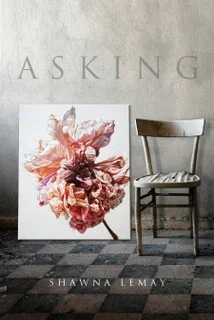
Asking
Asking is a collection of poems and poem-essays about paintings, ekphrasis, beauty, and deep looking, which takes its title from the lines by Phyllis Webb:
“Listen. If I have known beauty
let’s say I came to it
asking.”
Conversations on the page arise from observances made at cocktail parties, art galleries, at the kitchen table, and in the suburbs. Whether offering writing prompts or advice for aspiring poets, or enacting the conventions of ekphrasis, Asking is attentive to the movements and gestures of humans as they navigate a world of bewilderments and betrayal, but also a world of light and an ordinary beauty.
(Seraphim Editions, 2014)
- available in Edmonton at Audreys Books
mcnallyrobinson.com
amazon.com
amazon.ca
Chapters/Indigo
“Lemay gives the impression that she’s seeing the world for the first time after decades of deep reading and deep thinking, finding just the right words to report on her discoveries.”
“And that is what her writing is: stirred and mixed and very simple. And, yes, beautiful. The beauty is in the depth of her vision.”
– J.S. Porter, The Nancy Duffy Show
“To come to beauty, and to “use life” as, perhaps, “a time of approaching,” (as Lemay quotes from Hélène Cixous in one of her poem-essays) might sound, on the face of it, to retrace the steps of an incursion on some highly contested ground. Beauty is a concept that may contain a multitude of meanings, but if it has survived with any resonance through the old critical battles of the last century and beyond to some imagined “post-ideological” world we’re all now reputed to be living in (please someone tell the newscasters), it might be convalescing, in some state of diplomatic immunity.”
- John Delacourt, The Ottawa Review of Books
“Now, this may all sound cerebral and abstract and inaccessible, but Asking is blissfully simple and meaty and smart, and I would highly recommend this slim volume…”
“Some lines are laugh-aloud funny, others profound. In A Sonnet, which looks nothing like a sonnet, she writes, “I’d like to say something important just as much as the next poet.” And in Expresso (spelled that way deliberately), she reminisces about when specialty coffees arrived on Whyte Avenue before admitting she used to hate how people always say “take care” when parting ways. “But now I always want to end poems that way,” she writes. “You, lonely souls, take care, take care.”
– Elizabeth Withey
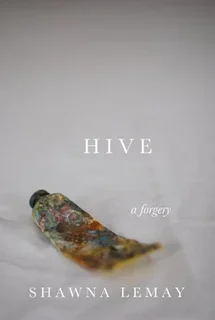
Hive
Hive is an experimental/poetic, allusive/elusive novel about the possibility of a woman art forger, about the belief in this possibility.
Hive is interested in anonymity, hidden-ness, how we see, what remains invisible, in suspicion, confessions, lies, obfuscation.
Hive is interested in belief. Not to mention fakery, forgery, mystification, shams, scams, hoaxes, greed, hunger. Hive is interested in what is real and honest.
Hive moves back and forth between fiction and creative non-fiction. Hive wonders what it is, and how to be, real in this world, so often fake.
"To say that Shawna Lemay’s poetic prose in Hive: A Forgery reminded me of Elizabeth Smart’s By Grand Central Station I Sat Down and Wept may be to invite a weighty – or overblown – comparison of Smart’s classic to Lemay’s more recent text. Such a comparison may be unfair for all kinds of reasons, but the two texts have more in common than their experimentation with poetic prose, although in some ways that hooky, ecstatic language is enough to encourage the comparison. Both books display a consciously romantic hyperbolized style that spins out the trope of the female artist as both performance and disappearance. Both offer a fictive autobiography in which the female artist is larger than life, appropriating and remaking the history of art as a tool for erotic subjectivity and artistic assertion, including the over-riding self-consciousness of the pleasures and the high cost of self-fashioning."
– Tanis MacDonald
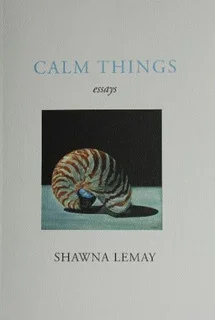
Calm Things
The term still life did not come into being until 1650. The French adopted the term nature morte, dead nature, around 1750. The painter de Chirico was said to have preferred the Italian term vita silente. The Japanese, however, call still life, calm things.
Calm Things is the title essay of this collection of meditations on what it is like to live with still life, and to live poetically.
Both an insider’s glimpse into the precarious world of artist and poet, and a long gaze at objects and the calm and silence they hold, these essays prize the ordinary, radiant gift of common things.
Palimpsest Press, 2008
Shortlisted for the 2009 Wilfred Eggleston Award for Non-Fiction.
"A writer looks deeply at paintings, and in the exercise of her deep attention, she learns and teaches as much about the art of writing as she does about the art of painting. It is a book about one art form that guides a reader towards a deeper understanding of all art forms. But most of all, it is a book that both embodies and instructs us on the need for, and place of, loving attention and receptivity in our over-crowded, jangling lives."
"Structurally, each paragraph works like a painting. You could, if you wanted, read each one in isolation, like a lyric poem."
– Susan Olding
"Calm Things by Shawna Lemay is the most beautifully written, generous and honest collection of personal essays that I've read in ages. Thought-provoking to say the least. Because the clean, pitch-perfect prose never calls attention to itself, I was left looking at a world through Lemay's eyes and with Lemay's clear, wide-angled vision. What I saw was a well-rounded world. A moving world. A world I both know and don't know."
– Brenda Schmidt, Alone on a Boreal Stage
"Lemay’s essays will appeal to those who wish to look at the world the way a still-life artist does: delicately and from oblique angles…. The cool temperature in her voice remains curious about everything from cone seashells to teacups and bowls… Despite jostling between objects and emotions, Lemay rarely succumbs to sentimental reverie without purpose; nor does she attempt to make bric-a-brac shimmer with empty words. In a kind of Roethkean or Keatsian sense, Calm Things describes the imaginative power commonplace objects hold."
– Richard Cole
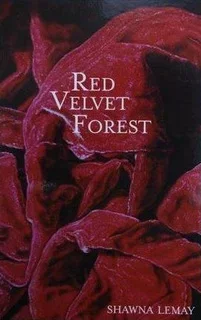
Red Velvet Forest
The poems in Red Velvet Forest become the trail that must be followed back through a dark wood reminiscent of the forest that consumed Grimm's Hansel and Gretel. The poet's quest is to find a magic clearing in the forest she remembers from childhood where she first experienced silence in nature, but the way there is fraught with the twists and deceptions of memory.
The Muses' Company, 2009
"Tracking the dead ends of suburbia through to the dream forests of childhood, Lemay's "ink trails" are "an enticing undergrowth."
These are poems that read with an intense privacy, as diary entries, raw and loose, written as if never to be seen."
– Jennifer Still, Winnipeg Free Press
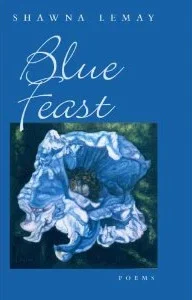
Blue Feast
Blue Feast examines motherhood, marriage, and the nature of everyday life. In these original, engrossing poems Lemay delves into universal feelings of isolation and the painfulness of writing. Her poetry strains between light and dark, exultation and sorrow.
“This is a must-read book that dares to poetically address accessible universal human realities like motherhood, marriage and other similar personal and domestic journeys. Of course, like good still life paintings, while the subject matter might seem mundane, it’s a highly dramatic form (literally a mini-theatrical mise-en-scene crossed with an altar-piece) that an agile artist like Lemay can endlessly plumb for greater (if subtle) political and philosophical ends.”
– Gilbert Bouchard
“a thoughtful meditation on the ephemeral and the numinous that reside in the corners of everyday domestic life…an abundant book, overflowing with emotion and ideas.”
– Alison Pick, Globe and Mail
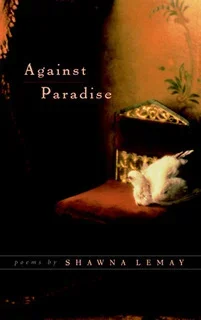
Against Paradise
Shawna Lemay’s rich, amused, insistent, ingenious meditation on Venice will surprise readers with its peculiar grace. Here is the work of an elegant raconteur; a self-effacing, sharp-eared occupier of voices; a high-toned, compassionate gossip. From many mouths, she offers us the city, doomed, full of light.
Lemay’s Venice is a small, crowded community of the delightfully eccentric dead. Through her quirky dramatic monologues, each one shimmering with a companionable intelligence, we meet them – George Eliot, Peggy Guggenheim, Lord Byron, Mary Shelley, Effie Ruskin, Ernest Hemingway, Titian, various unnamed others; we meet them in mid-speech; it seems they have never stopped talking, talking, telling now (or refusing still to tell) their secrets, protecting their vanities still, finally saying what they truly think. Lemay has given us an entire world, dark, haughty, watery, beautiful, full of voices, sedimented with stories..
McClelland & Stewart, 2001
“…a rich collection of poems celebrating Venice in the eternal present tense of art and literature.”
– Todd Babiak
“Lemay has a sharp eye for detail, a gift for the apt phrase, and a sardonic wit that, in the best of these poems, allows both deep emotion and a clear recognition of the follies of lonely lost humans.”
– Douglas Barbour
“There are some finely honed and beautiful poems in this collection, in pieces that can be admired not only for craft and wry humour, but, more important, enjoyed.”
– Globe and Mail
“Elegant. Lush. Decadent.”
– matt robinson
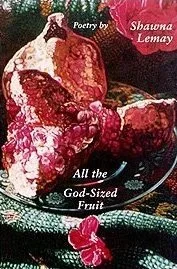
All the God-Sized Fruit
Shawna Lemay scrutinizes some of the best-known art masterpieces of the Western world, alerting her readers to the power and peril of seduction. All the God-sized Fruit melds the sister arts - poetry and painting - in a sensual exploration of history, forgery, and violation.
In poems rich with sensory pleasure, Lemay explores the place where image and inspiration meet.
Winner Of The Gerald Lampert Memorial Award And The Stephan G. Stephannson Award.
“There is a searchingness in the imaginative detail of these canvases, and a strong sense of a ruined world gently picked up and turned in the hand, under the eye, the details of chaos transformed into the ink of re-creation.”
– Jeffery Donaldson
“The book is engaging, her voice assured, her critical eye aware of the darker implications behind the suffusing light emanating from the glossy oil on a canvas.”
– Paulo da Costa